/ Work
Sales Rep App
/ Overview:
Client
Material Bank
Year
2025
Role
Product Discovery
UX Thinking
AI Integration
Sales reps don't lose deals because they lack information. They lose them because the information is somewhere else.
Through interviews and surveys, the pattern was consistent. The work itself wasn't the problem. But every time a rep moved between tools — a note here, an order there, a reminder that lived in a different app, they left a little context behind. And every time they came back to a project, they spent the first few minutes rebuilding a picture they'd already built before.
The problem wasn't missing information. It was that context kept getting left behind.
A rep's day doesn't happen inside a single screen. It moves across conversations, site visits, samples, orders, and follow-ups.
Leads become projects. Projects generate new leads. The distinction made sense to the software. It didn't make sense to the work. We unified them.
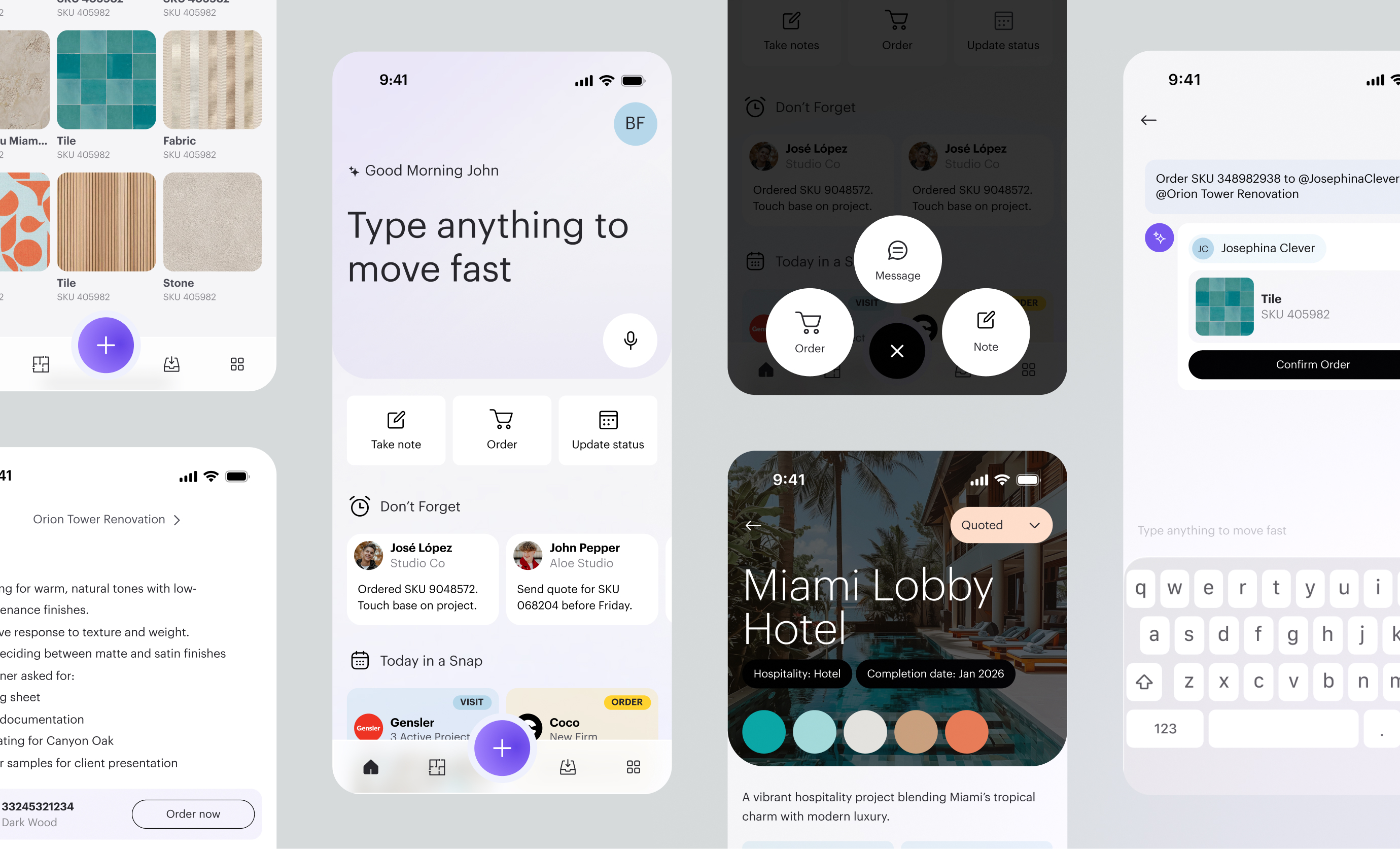
Leads and projects now share a single flow. Context, progress, and actions move together, so when a rep returns to a project, everything they need is already there. The color palette, the samples ordered, the notes from the last visit. No rebuilding. No catching up.
The same idea shaped the rest of the product.
Notes can tag team members, attach products, and set reminders keeping the right information attached to the right project, visible to the right people.
The AI assistant handles the tasks most likely to break the flow: place an order, request a quote, follow up on a lead. A single prompt instead of a context switch.
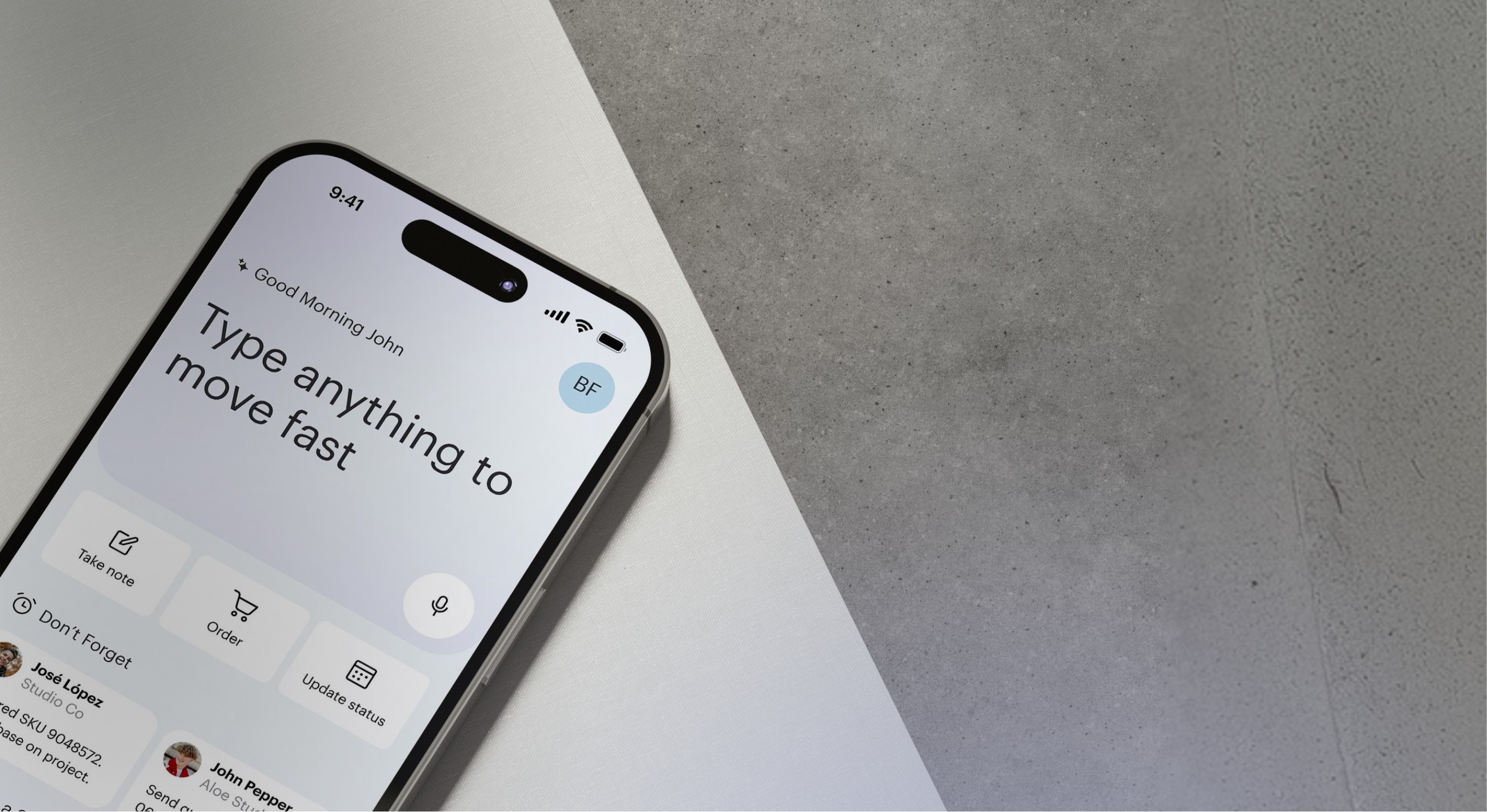
The home screen doesn't try to do everything. It surfaces the three actions that keep a project moving: notes, status, orders — and stays out of the way the rest of the time.
The best tool for a rep isn't the one with the most features. It's the one that keeps the right information moving.